


When it comes to designing and constructing bespoke fitted wardrobes, choosing the right material is critical. The material you choose will affect not only the durability and functionality of your wardrobe but also its aesthetic appeal. Two of the most popular options for fitted wardrobes are plywood and MDF, or Medium Density Fibreboard. Both materials have their advantages and disadvantages, and the right choice depends largely on your specific needs, preferences, wardrobe design and budget.
For fitted furniture suppliers, it is important to consider the qualities of each material before making a final decision to sell. A wardrobe may look impressive from the outside, but the material used inside the carcass, shelves, drawers and doors can have a major effect on how it performs over time. Understanding these differences can help homeowners make a more informed choice when planning bespoke built-in wardrobes.
This guide compares MDF and plywood for fitted wardrobes, looking at their strength, weight, moisture resistance, appearance, finishing options, cost and suitability for different bedroom designs. If you are asking whether plywood or MDF is better for bespoke fitted wardrobes, the answer is not simply one or the other. Each material performs differently, and the best option depends on where and how the wardrobe will be used.
What Is MDF?
MDF is an engineered wood product made from finely ground wood fibres combined with resin and compressed under heat and pressure. It is widely known for its smooth, even surface, making it ideal for painting and veneering. Due to its smooth texture, MDF is a popular choice for custom wardrobes that require intricate designs or sleek finishes.
One of the biggest benefits of MDF is its consistency. Unlike natural timber, MDF does not contain natural knots or prominent grain variations. This creates a uniform surface that can work particularly well with contemporary fitted wardrobe designs. When the aim is to achieve a painted finish, the even surface of MDF can make preparation and finishing easier.
MDF is also available in different thicknesses and grades, which means it can be used for several parts of a wardrobe. However, the exact specification matters. Standard MDF is not the same as moisture-resistant MDF, and the material should be selected according to the environment in which the wardrobe will be installed.
Advantages of MDF for Bespoke Fitted Wardrobes
MDF has a smooth surface that is perfect for painting or applying veneers. If you are planning to add a specific colour or finish to your bespoke built-in wardrobes, MDF can be a practical choice. Its even surface can produce a clean appearance when properly prepared and finished.
Cost is another reason homeowners consider MDF. MDF is generally more affordable than plywood, making it suitable for people who want a custom wardrobe while keeping the overall project cost under control. The final price will still depend on the wardrobe size, internal storage, door style, hardware, finish and installation requirements.
Consistency is another useful feature. MDF is made from wood fibres, so its structure is generally uniform throughout the board. This can be helpful when creating fitted wardrobes with clean lines, flat panels and carefully measured sections. It also makes MDF suitable for designs where a consistent painted appearance matters more than a natural wood grain.
The material also offers considerable design flexibility. Its smooth surface works well for modern wardrobe doors, decorative profiles and other details. A minimalist wardrobe with plain doors and a painted finish can make particularly good use of MDF.
MDF can also be machined into different shapes for decorative purposes. This makes it useful when a wardrobe design includes routed details, panelling or other features that need a smooth finished surface. Its versatility has helped make MDF a common material in fitted furniture.
Disadvantages of MDF for Fitted Wardrobes
One of the main drawbacks of MDF is its sensitivity to moisture. Standard MDF can absorb water and may swell or lose its shape when exposed to prolonged damp conditions. This means the environment should always be considered before selecting MDF for fitted furniture.
Moisture exposure is particularly important in rooms with high humidity or where water may come into contact with furniture. Although specialist moisture-resistant MDF products are available, they should not be treated as completely waterproof materials.
MDF is also generally heavier than plywood. For a large fitted wardrobe, the weight of the boards can make transportation, handling and installation more demanding. Good design and correct installation remain important regardless of the board selected.
Another consideration is impact resistance. MDF can be damaged by strong impacts, particularly around exposed edges and corners. Once an edge has been badly damaged, repairs may be more noticeable depending on the chosen finish.
These points do not mean MDF is unsuitable for fitted wardrobes. In a dry bedroom with normal household use, correctly specified MDF can provide a practical and attractive material for many wardrobe designs.
What Is Plywood?
Plywood is a wood-based sheet material made from multiple thin layers of veneer that are glued together. The layers are typically arranged with their grain directions alternating, which helps give plywood its strength and dimensional stability.
The construction of plywood gives it a different character from MDF. Instead of being made from finely ground wood fibres, plywood retains layers of natural wood veneer. The quality of those veneers, the adhesive used and the manufacturing process can all affect the finished board.
Plywood is known for its strength and relatively good resistance to changes in shape. It is therefore often considered when a wardrobe needs to carry substantial loads or when the furniture is expected to receive frequent use.
There are different types and grades of plywood, so simply choosing plywood does not automatically guarantee a particular level of performance. Birch plywood, hardwood plywood and other varieties can have different appearances, strengths and prices. The specification should therefore match the intended application.
Advantages of Plywood for Bespoke Fitted Wardrobes
Plywood is known for its strength and can support significant weight when correctly specified and constructed. This can make it suitable for fitted wardrobes with large shelves, substantial storage compartments and drawers that will be used frequently.
Another advantage is its resistance to moisture compared with standard MDF. Plywood is generally less prone to swelling when exposed to limited moisture, although it is not waterproof. The type of plywood and quality of its edges and finish also affect how it responds to moisture.
Plywood can also provide a natural wood appearance. The visible layers and grain can become an important part of the design, particularly when the homeowner wants a more natural or contemporary interior. Depending on the grade, plywood can be painted, stained, veneered or left exposed.
Its construction also gives plywood good versatility. It can be used in traditional and contemporary wardrobe designs, from simple storage interiors to more detailed bespoke furniture. When the material itself is intended to form part of the visual design, plywood can provide a distinctive finish.
For homeowners who expect their wardrobes to receive heavy daily use, the strength of plywood can make it an attractive option. It is particularly worth considering when the internal structure needs to carry heavier items or when long-term physical performance is a priority.
Disadvantages of Plywood for Fitted Wardrobes
The main disadvantage of plywood is its price. Good-quality plywood can cost more than MDF, particularly when a premium grade or attractive visible veneer is required. For a large fitted wardrobe, this difference can have a noticeable effect on the overall project cost.
Plywood can also have a more pronounced surface texture than MDF. While this can be an advantage when a natural wood appearance is wanted, it may require more preparation if the desired result is an extremely smooth painted finish.
The visible edges can also require careful finishing. Depending on the design, the layered construction may either become an attractive feature or need to be covered with edging, veneer or another finishing treatment.
As with MDF, plywood comes in different grades, and quality can vary considerably. A lower-cost plywood board may not provide the same appearance or performance as a high-grade product. The material should therefore be assessed as a specific product rather than judged only by its general name.
Plywood Vs MDF: Which Is Better for Fitted Wardrobes?
When comparing plywood and MDF for bespoke fitted wardrobes, there is no single material that is best for every project. The right choice depends on what matters most to the homeowner.
For durability, plywood generally has the advantage. Its layered construction provides good strength and makes it suitable for furniture that needs to withstand regular use. MDF can still perform well in bedroom furniture, particularly when correctly supported and protected, but it may be more vulnerable to dents and damage from heavy impact.
Moisture resistance is another area where plywood usually has an advantage over standard MDF. However, neither material should be considered waterproof. If a wardrobe is being installed in an area where humidity or occasional moisture is a concern, the material specification and finishing system should be considered carefully.
Cost often favours MDF. Homeowners working within a defined budget may find MDF allows them to achieve a large fitted wardrobe with a painted or veneered finish without the higher material cost associated with premium plywood.
For painted wardrobes, MDF is often a strong choice because of its smooth surface. This can be particularly useful for contemporary fitted bedroom furniture where the doors need to have an even, clean appearance.
Plywood has a natural appearance that can add character to a wardrobe. Its layered construction and wood grain can suit homeowners who prefer a more natural material aesthetic. MDF, by comparison, works particularly well when the focus is on colour, smoothness and clean lines.
Weight is another practical consideration. MDF is generally heavier, while plywood can provide a favourable strength-to-weight balance. This can matter during the manufacture and installation of larger fitted wardrobes.
The answer to the question “Is plywood or MDF better for bespoke fitted wardrobes?” therefore depends on the intended use. MDF can be the better choice for a cost-conscious, painted contemporary wardrobe, while plywood can be the better choice when strength, natural appearance and greater resistance to everyday wear are higher priorities.
Which Material Is Better for Wardrobe Doors?
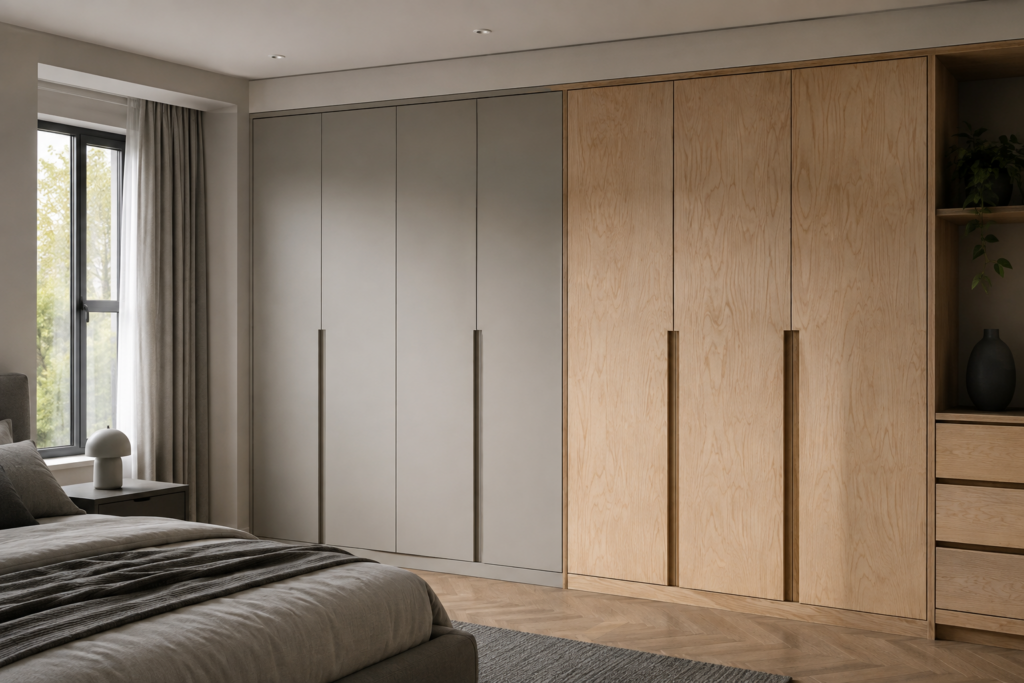
Wardrobe doors are one of the most visible parts of fitted furniture, so the material needs to suit the desired finish as well as the expected use. MDF is particularly suitable for painted wardrobe doors because its smooth surface can provide an even base for a high-quality finish.
This makes MDF popular for modern fitted wardrobes with plain panels, muted colours and minimalist styling. It can also work well for doors that include decorative profiles or routed details.
Plywood can be a good choice when the wardrobe doors are intended to showcase natural wood. The grain and layered structure can contribute to a more distinctive appearance. It can also suit interiors where natural materials are an important part of the overall bedroom design.
The choice should also take account of door thickness, hinges, hardware and overall door size. A large wardrobe door creates different structural demands from a small cupboard door, so material selection should form part of the wider design process rather than being considered in isolation.
Which Material Is Better for Wardrobe Carcasses and Shelves?
The internal structure of a wardrobe deserves as much attention as the doors. Shelves, dividers and wardrobe carcasses need to carry clothes, shoes, boxes and other personal belongings without excessive movement.
Plywood can be particularly useful for areas where strength is important. Its layered structure can provide good support for shelves and larger storage sections when the board thickness and supporting structure are correctly specified.
MDF can also be used effectively for wardrobe interiors. Its consistent surface makes it suitable for shelving, partitions and other components, especially where the expected load is within the material’s appropriate range.
Shelf width also matters. A very long shelf may require more support regardless of whether MDF or plywood is used. Good wardrobe design considers the span, thickness, expected load and position of supports instead of assuming that one material will solve every structural requirement.
This is why a well-designed fitted wardrobe should be assessed as a complete system. The board material, thickness, joinery, hardware, shelf supports, doors and installation all contribute to the final result.
Is MDF or Plywood Better for a Painted Fitted Wardrobe?
For homeowners who want painted bespoke fitted wardrobes, MDF is often the natural choice. Its smooth surface makes it easier to prepare for paint and can help create a consistent finish across large panels.
A painted MDF wardrobe can suit a wide range of bedroom styles. Soft neutral colours can create a calm appearance, while darker shades can provide a stronger focal point. The material itself does not dictate the style, so the final appearance depends on the design, paint system, hardware and surrounding room.
Plywood can also be painted, but the natural characteristics of the material may require additional preparation if the objective is a completely smooth surface. Some homeowners prefer to preserve the character of the wood rather than cover it with paint.
The decision therefore comes down to the desired visual result. If a smooth painted finish is the priority, MDF may be the more practical material. If the natural appearance of timber is part of the design, plywood may offer greater visual interest.
Is Plywood Worth the Extra Cost for Fitted Wardrobes?
Whether plywood is worth the additional cost depends on what you expect from the wardrobe. If the furniture will experience heavy daily use, needs strong internal storage or forms part of a long-term bedroom renovation, spending more on the material may be worthwhile.
However, paying more does not automatically mean that a wardrobe will be better for every homeowner. MDF can provide excellent results when the design, material grade, finish and installation are appropriate for the room.
The most useful approach is to consider where the additional money provides genuine value. If natural wood appearance and higher strength are important, plywood may justify the additional cost. If a smooth painted finish and controlled budget are more important, MDF may provide the better balance.
The same principle applies when choosing materials for different sections of the wardrobe. A project does not always have to use one material throughout. Depending on the design and manufacturing approach, different materials can sometimes be selected for different components.
What Should You Consider Before Choosing Wardrobe Material?
The room should be considered first. A dry bedroom presents different material requirements from a space with high humidity. Standard MDF can work very well in normal bedroom conditions, while plywood may be considered where greater moisture resistance is useful.
The wardrobe’s expected workload also matters. A wardrobe storing lightweight clothing has different requirements from one carrying heavy storage boxes, large shoe collections and substantial accessories.
The finish should also guide the decision. A smooth painted wardrobe often suits MDF, while natural timber aesthetics can make plywood more attractive. The preferred colour, door style and overall bedroom design should therefore be considered before final material selection.
Budget is another important factor. The cost of the board is only one part of the final fitted wardrobe price. Design complexity, internal storage, drawer systems, handles, hinges, finishes, delivery and installation can all affect the total.
It is also worth asking what material will be used for each part of the wardrobe. A supplier should be able to explain whether the carcass, doors, shelves, drawer boxes and decorative panels use the same board or different materials.
For homeowners researching fitted wardrobe costs, it can be useful to compare specifications rather than comparing headline prices alone. Two wardrobes can look similar but contain very different materials and internal hardware.
How Do MDF and Plywood Compare in Everyday Use?
In everyday bedroom use, both materials can perform well when selected and installed correctly. MDF offers a smooth, consistent surface and can work particularly well for contemporary painted wardrobes. Plywood offers greater structural strength and a natural wood character that some homeowners prefer.
The differences become more noticeable when the furniture is exposed to heavy impact, higher moisture levels or unusually high storage loads. This is where the material specification becomes especially important.
Maintenance also depends heavily on the finish. Painted surfaces should be cleaned according to the manufacturer’s recommendations, while natural wood or veneered surfaces may require different care. Water should not be allowed to sit on either MDF or plywood for prolonged periods.
The wardrobe should also be kept properly ventilated where possible. Good ventilation helps reduce unnecessary humidity inside enclosed storage spaces and can support the long-term condition of clothing and furniture.
Frequently Asked Questions About Plywood and MDF Fitted Wardrobes
Is plywood stronger than MDF for fitted wardrobes?
Yes, plywood is generally stronger than standard MDF because of its layered construction. It can be particularly suitable for shelves, carcasses and other wardrobe components that need to carry heavier loads. However, the thickness, grade, design and support system also affect the final strength of the wardrobe.
Is MDF good for bespoke fitted wardrobes?
Yes, MDF can be an excellent material for bespoke fitted wardrobes, particularly when a smooth painted finish, clean lines and controlled project cost are important. It is widely used for contemporary wardrobe doors and other fitted furniture components.
Which is cheaper, MDF or plywood?
MDF is generally cheaper than good-quality plywood. The exact price difference depends on board thickness, grade, finish and supplier. The overall fitted wardrobe cost also includes manufacturing, hardware and installation, so material price alone does not determine the final budget.
Does MDF last as long as plywood?
MDF can last for many years when used in a suitable dry environment and protected from excessive impact and moisture. Plywood generally has greater strength and can be better suited to demanding applications. Good design and installation can make a significant difference to the service life of either material.
Can MDF wardrobes get wet?
Standard MDF should not be exposed to prolonged moisture because it can absorb water, swell and lose its shape. Moisture-resistant MDF is available, but it still needs suitable protection and should not be treated as waterproof.
Can plywood be used for wardrobe doors?
Yes, plywood can be used for wardrobe doors. It can be painted, stained, veneered or left with its natural appearance depending on the design. Its strength makes it suitable for many door applications, although the board grade and thickness should be selected carefully.
Which material is best for painted wardrobes?
MDF is often preferred for painted wardrobes because it has a smooth and consistent surface. It can provide a good base for contemporary painted finishes and decorative door details.
Is plywood better for heavy wardrobe storage?
Plywood can be a strong option for heavy wardrobe storage because of its strength and layered construction. However, the shelf thickness, length, supports and fixing method also need to be suitable for the intended load.
Can you use both MDF and plywood in one fitted wardrobe?
Yes, different materials can be used for different wardrobe components when the design and manufacturing process allow it. For example, MDF may suit painted doors while plywood may be selected for certain structural sections. The final specification should be based on the intended use of each component.
How do I choose between MDF and plywood for bespoke fitted wardrobes?
Start by considering the wardrobe’s location, expected use, desired finish and budget. If you want a smooth painted appearance at a lower material cost, MDF may be suitable. If strength, natural wood appearance and greater resistance to everyday wear are more important, plywood may be worth considering.
Final Thoughts: Which Is Best for Your Bespoke Fitted Wardrobe?
Both plywood and MDF have their advantages when it comes to building bespoke fitted wardrobes, but the decision comes down to your specific needs and preferences. MDF is a practical option for homeowners who want a smooth, affordable material that works particularly well with painted and contemporary wardrobe designs. Plywood is an appealing choice for those who place greater importance on strength, natural wood character and long-term everyday performance.
The best material also depends on how the wardrobe will be used. A bedroom wardrobe with painted doors and moderate storage requirements may work very well with MDF. A heavily used wardrobe with larger shelves and a preference for natural wood may benefit from plywood.
It is also important not to judge a fitted wardrobe by its visible doors alone. The internal carcass, shelving, drawer construction, hinges, runners, fixings and installation all contribute to how the finished furniture performs. Asking about these details before choosing a wardrobe can help you understand what you are paying for and whether the specification suits your home.
For homeowners comparing fitted wardrobe materials, V Design Kitchens and Bedrooms considers the intended use, preferred appearance, available space and overall design when helping clients select suitable materials for bespoke fitted furniture. The aim is to create storage that works naturally within the room while matching the practical needs and visual preferences of the homeowner.
Whichever material you choose for fitted wardrobes, both plywood and MDF can be used to create attractive and functional bespoke fitted wardrobes when they are correctly specified, manufactured and installed. The right decision is less about choosing the material with the biggest list of advantages and more about choosing the material that fits the way you actually use your bedroom.