


Fitted wardrobes are a popular choice for homeowners who want more storage without allowing bulky furniture to take over the bedroom. Unlike freestanding wardrobes, fitted furniture is planned around the available wall space, ceiling height, room shape and storage requirements. This can make a noticeable difference in bedrooms where every centimetre matters.
So, how much do fitted wardrobes cost in the UK? The short answer is that there is no single price. A simple fitted wardrobe with basic shelving and hanging rails can cost considerably less than a large bespoke design with sliding doors, drawers, lighting, mirrors and specialist storage. Current UK cost guides put a standard three-door fitted wardrobe at around £3,250 on average, while a three-door sliding-door version can average around £3,700. A wider six-door fitted wardrobe can reach around £4,800, while the price can rise further for highly customised designs.
The final fitted wardrobe cost depends on much more than the number of doors. Materials, dimensions, door style, internal storage, finishes, installation, room preparation and the complexity of the space can all affect the quotation. A bedroom with straight walls and plenty of room may be relatively straightforward, while a loft room with sloping ceilings, awkward corners or chimney breasts may require much more planning and construction work.
Understanding these factors before requesting a quote makes it easier to compare prices and decide where your budget should go. It also helps you avoid focusing only on the headline price when the real difference may be in the materials, storage and installation included.
What Are Fitted Wardrobes and Why Do They Cost More?
Fitted wardrobes are storage units made to occupy a particular area of a bedroom rather than being bought in a standard size and placed against a wall. The design can run from floor to ceiling, extend across one wall or wrap around corners. It can also be adapted around windows, chimney breasts, sloping ceilings, alcoves and other features that would make conventional furniture difficult to use.
This difference is one of the main reasons fitted wardrobe prices are higher than those of many freestanding wardrobes. You are paying for the design and manufacture of furniture that has to work with the dimensions of the room. The installation also requires accurate measuring and careful positioning so that doors, drawers and internal fittings operate correctly.
The biggest advantage is the amount of usable storage that can be created. A standard wardrobe may leave empty space above it, beside it or behind it. A fitted design can use those areas instead. This is particularly useful in smaller bedrooms, loft conversions and rooms with unusual layouts.
The appearance is another important consideration. A fitted wardrobe can be designed to sit naturally within the room rather than looking like a separate piece of furniture. Door colours, finishes, handles, mirrors and internal layouts can all be selected to suit the overall bedroom.
The level of customisation, however, affects the cost. A straightforward wardrobe with standard doors, shelves and hanging rails will normally sit at a different price point from a completely bespoke wardrobe with premium finishes and specialist storage.
How Much Do Fitted Wardrobes Cost in the UK?
For homeowners researching fitted wardrobes cost, current UK figures provide a useful starting point, although they should not be treated as fixed prices. Checkatrade’s 2026 cost guide gives an average of about £3,250 for a standard three-door fitted wardrobe, with typical prices of roughly £2,500 to £4,000. A three-door sliding wardrobe is around £3,700 on average, while a six-door wide fitted wardrobe is around £4,800. A two-section custom-built fitted wardrobe is listed at about £3,400.
These figures show why asking how much fitted wardrobes cost without describing the size and specification can produce very different answers. Two wardrobes may both have three doors but still have substantially different prices because one has simple shelving while the other has drawers, lighting, mirrors and specialist compartments.
At the lower end, a basic fitted wardrobe may use MDF or laminate finishes with straightforward shelves and hanging rails. A mid-range design may include better finishes, additional drawers, soft-close fittings, improved internal organisation and integrated lighting. A premium or luxury wardrobe can include made-to-measure construction, higher-end timber or veneer, specialist finishes, bespoke interiors and more complex door designs.
The original cost categories often used for fitted wardrobes can also be understood in a UK context as budget, mid-range, premium and luxury. A basic wardrobe may be comparatively simple in its construction and internal layout. A mid-range wardrobe adds more choice and storage features. Premium furniture introduces better materials and greater customisation, while luxury projects can involve highly individual designs and specialist craftsmanship.
It is worth remembering that a very low initial quotation does not automatically represent better value. The important question is what the price actually includes. One quote might cover only the furniture, while another could include measuring, manufacture, delivery, installation, internal fittings, finishing work and electrical preparation for lighting.
A current UK cost guide also places carpenter labour at roughly £240 to £300 per day, with an average around £270. The labour element will vary depending on the installer, location, preparation required and complexity of the project.
What Factors Affect the Cost of Fitted Wardrobes?
The size and shape of the wardrobe are among the first things that affect fitted wardrobe cost. A compact wardrobe occupying one section of a wall will naturally require less material and installation time than a full-width bedroom design covering several metres. Larger projects may also need more doors, shelving, rails, drawers and finishing materials.
Room shape can make an equally important difference. A straightforward rectangular bedroom is usually easier to work in than a loft bedroom with sloping ceilings. Wardrobes for sloping ceilings require careful measurements because the height changes across the unit. Angled sections and awkward corners may also require individual components rather than standard-sized panels.
The choice of material has a direct effect on price. MDF is widely used for fitted furniture because it can be painted or finished in different ways and can provide a practical option for many designs. Veneers can provide the appearance of natural timber, while solid wood can sit at a higher price level depending on the timber and construction.
The external finish also matters. A simple painted finish may cost less than a premium gloss, timber-effect surface or specialist decorative finish. Mirrored doors can increase the price while also making a room feel brighter and visually larger. The choice between matte, gloss, wood-effect, painted and mirrored surfaces should therefore be considered alongside the overall bedroom design rather than as an isolated cost.
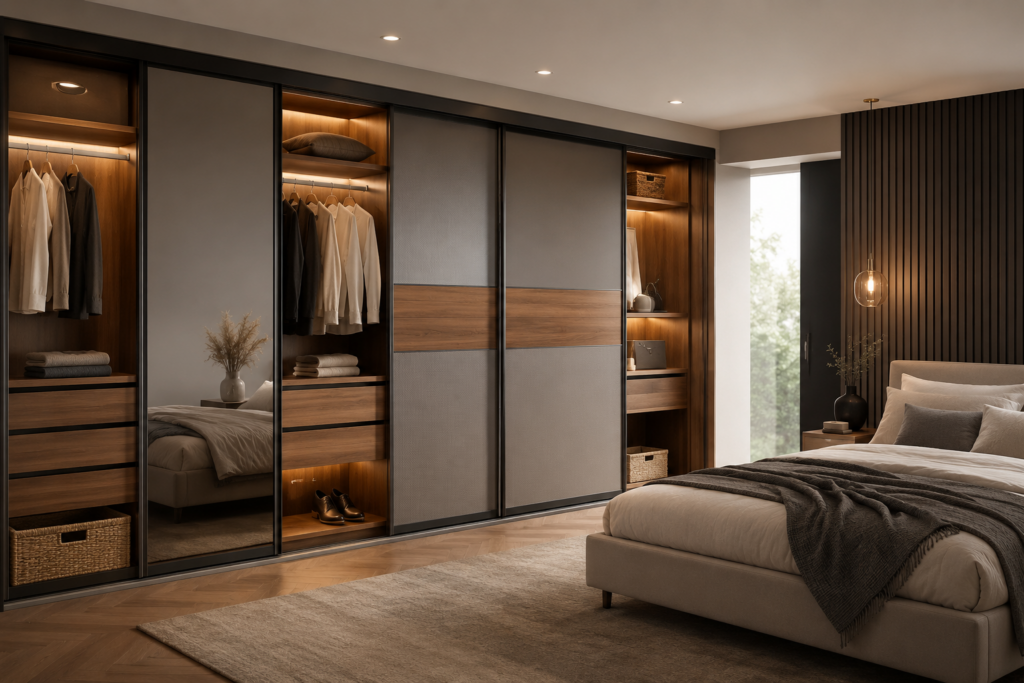
Door style is another major consideration. Hinged doors are a traditional choice and can be straightforward to manufacture and install. Sliding doors can be useful where there is limited space in front of the wardrobe because the doors move across the unit instead of opening into the room. This convenience can come with a higher cost. Current UK cost guidance suggests that sliding doors can add around £450 compared with a standard three-door fitted wardrobe.
Bifold and other specialist door systems can introduce further costs because of their mechanisms and installation requirements. Handles, soft-close systems, mirrors and decorative details can also change the final quotation.
The internal layout is often overlooked when homeowners first think about fitted wardrobe prices. Shelves and hanging rails are relatively straightforward, but drawers and specialist storage can add to the overall cost. Pull-out shoe storage, double-hanging rails, pull-down rails, jewellery trays, laundry baskets, trouser rails and dedicated compartments all require additional components and planning.
Lighting is another feature that can increase the budget. Integrated LED lighting can make it easier to see inside darker wardrobe sections, particularly in deep units. If electrical work is required, that may involve an electrician as well as the wardrobe installer. Checkatrade currently gives an indicative electrician hourly rate of £45 to £60.
Even small design decisions can therefore add up. A wardrobe does not become expensive because of one single feature. The total usually reflects the combination of size, materials, doors, storage, finish, installation and room conditions.
Fitted Wardrobe Cost by Design and Storage Requirements
A basic single fitted wardrobe is usually the simplest starting point. It may contain a hanging rail, a small number of shelves and standard hinged doors. This type of design can work well where the main goal is to replace an old freestanding wardrobe with something that uses the available wall space more effectively.
A larger multi-door wardrobe naturally costs more because it requires additional panels, doors and internal storage. A full-wall arrangement can be particularly useful for a couple sharing a bedroom because the internal layout can be divided according to different storage needs.
Sliding wardrobes are another common choice. Their main attraction is the way they operate. Because the doors travel across the front of the wardrobe, they do not need the same clear floor area as hinged doors. This can be helpful in smaller bedrooms where a bed or other furniture sits close to the wardrobe.
For homeowners considering fitted sliding wardrobes cost, the price should be assessed alongside the sliding mechanism, door material, finish and number of panels. A simple sliding system and a premium mirrored or decorative system will not necessarily cost the same.
Bespoke wardrobes can cost more when the room presents challenges that standard furniture cannot easily address. Sloping ceilings, chimney breasts, alcoves and unusually high ceilings all require more detailed planning. The benefit is that difficult areas can become useful storage rather than being left empty.
Internal organisation can also be planned around how the wardrobe will actually be used. Someone with a large collection of hanging clothes may need more rails, while another homeowner may gain greater value from drawers, shelves or shoe storage. Designing the interior around real habits can prevent wasted space and avoid paying for features that will rarely be used.
How Much Does Installation Add to Fitted Wardrobe Cost?
Installation is an important part of the total price and should never be treated as an afterthought. Fitted furniture needs accurate positioning, levelling and adjustment because walls and floors are not always perfectly straight. Doors must also be aligned correctly, while drawers and sliding mechanisms need to operate smoothly.
A straightforward installation may take around one to two days, although larger or more complicated wardrobes can take longer. A loft wardrobe, for example, may require more preparation because each section needs to follow the shape of the ceiling.
The quotation should make clear whether installation is included. Some companies provide one overall price covering design, manufacturing, delivery and fitting, while other arrangements separate these costs. Delivery, removal of old furniture, electrical work, plastering and painting may also be charged separately.
Room preparation can become another cost. If walls need repair, plastering or painting before installation, that work should be completed at the appropriate stage. Some projects may also require skirting boards or other existing features to be adjusted so that the new furniture sits correctly.
This is why comparing the final totals alone can sometimes be misleading. A £3,000 quote and a £4,000 quote may appear very different, but if the more expensive quote includes additional storage, installation, lighting preparation and finishing work, the actual comparison may be closer than expected.
How Can You Reduce the Cost of Fitted Wardrobes?
There are several sensible ways to control fitted wardrobe prices without removing the main benefits of fitted furniture. Choosing MDF or laminate instead of more expensive materials can reduce the budget while still providing a wide choice of colours and finishes.
Keeping the design straightforward can also make a difference. A wardrobe with standard hinged doors, shelves and hanging rails will generally require less work than one filled with drawers, specialist mechanisms and decorative features. This does not mean removing useful storage. It means deciding which features genuinely improve the way the room is used.
It is also worth comparing several detailed quotations. Current cost guidance recommends obtaining at least three quotes when possible, as this gives homeowners a better idea of the price range for their particular project.
DIY installation is another possible way to reduce labour costs, but it is only sensible for someone with the necessary practical skills. Fitted wardrobes need accurate measurements and careful installation. A mistake with a door, drawer or internal section can affect the whole arrangement and may create additional repair costs.
Some homeowners consider adapting modular furniture to create a built-in appearance. This can reduce the initial furniture cost, although customising standard units can require additional carpentry and installation work. The final saving therefore depends on the room, the units selected and how much modification is required.
The best cost-saving approach is usually to spend money on the parts that affect daily use and avoid paying for features that simply look impressive. Good internal storage, appropriate dimensions and suitable door operation can be more useful than adding decorative extras that are rarely used.
Fitted Wardrobes vs Freestanding Wardrobes
Freestanding wardrobes generally have a lower starting price because they are manufactured in standard sizes and can be purchased ready to assemble or install. They can also be moved more easily if you change your room layout or move home.
Fitted wardrobes take a different approach. They are designed around the available space and can use areas that would otherwise remain empty. This makes them particularly useful in bedrooms with alcoves, sloping ceilings, narrow walls or unusual proportions.
The comparison should therefore go beyond the purchase price. A freestanding wardrobe may cost less initially, but it may leave unused space above and around the furniture. A fitted wardrobe can make better use of the full wall height and provide storage designed around the homeowner’s needs.
There is also an aesthetic difference. Fitted furniture can create a more integrated appearance, while freestanding wardrobes remain separate pieces within the room. Neither option is automatically better for every homeowner. The right choice depends on budget, room size, storage needs and how long you expect to stay in the property.
Regional Differences in Fitted Wardrobe Prices
Where you live can affect the cost of fitted wardrobes because labour rates, property types, demand and access conditions vary between areas. Urban locations may have higher labour and operating costs, while other areas can have different pricing depending on local competition and availability of skilled installers.
London and surrounding areas can also present particular challenges because many homes have compact bedrooms, loft conversions, older properties and unusual room layouts. These conditions can make accurate measuring and careful installation especially important.
Location should therefore be considered when comparing an online price guide with a quotation for your own home. National averages are useful for budgeting, but they cannot account for the exact dimensions, materials, design and installation conditions of an individual project.
How to Choose a Fitted Wardrobe Provider
The quality of the provider can have a major influence on the final result, so price should not be the only consideration. Looking at previous projects can show how a company handles different room shapes, finishes and storage arrangements.
Reviews can provide useful information about communication, installation and the finished product, although they should be considered alongside photographs and detailed quotations. It is helpful to ask exactly what is included before agreeing to a project.
A good quotation should make the specification clear. This can include the approximate dimensions, number and type of doors, material, finish, internal storage, handles, lighting, delivery and installation. Asking questions at this stage can prevent unexpected costs later.
It is also worth discussing the practical side of the design. A wardrobe can look excellent in a drawing but still be inconvenient if doors cannot open properly because of the bed position or if shelves are placed where they are difficult to reach. The design should work with the room rather than simply filling the available wall.
For homeowners considering a wider bedroom upgrade, it can also be useful to look at fitted bedroom furniture and bedroom storage solutions before finalising the wardrobe design. These related options can help create a consistent storage plan rather than treating the wardrobe as an isolated piece of furniture.
Are Fitted Wardrobes Worth the Investment?
Whether fitted wardrobes are worth the cost depends on how much value you place on storage, appearance, durability and use of space. They can be more expensive than standard freestanding furniture, but they can also solve problems that standard furniture cannot.
For a small bedroom, using the full height of the room can provide considerably more storage without increasing the floor area. In an awkward loft room, fitted furniture can make use of low sections beneath a sloping ceiling. In a larger bedroom, a full-width arrangement can create a dedicated storage wall and reduce the need for several separate pieces of furniture.
Durability also matters. The lifespan of fitted wardrobes depends on the materials, construction and how they are used. Good-quality components and careful installation can help the furniture remain functional for many years.
There is also the question of future buyers. Built-in storage can be an appealing feature because it gives a bedroom an organised appearance and removes the need for the next owner to purchase wardrobes. However, no fitted wardrobe should be treated as a guaranteed way to increase a property’s value. The benefit is more accurately viewed as an improvement to the functionality and presentation of the home.
Current UK homeowner discussions also show that fitted wardrobe quotations can vary considerably for similar-looking spaces, which reinforces the importance of comparing the specification rather than simply comparing the final figure.
Frequently Asked Questions About Fitted Wardrobe Cost
How much do fitted wardrobes cost on average in the UK?
A standard three-door fitted wardrobe currently averages around £3,250, while a three-door sliding wardrobe is around £3,700. Larger six-door designs can average around £4,800. These are guide figures rather than fixed prices because dimensions, materials and features vary between projects.
Are fitted wardrobes more expensive than freestanding wardrobes?
Usually, yes. Fitted wardrobes involve planning, custom measurements, manufacture and installation, whereas many freestanding wardrobes use standard dimensions. However, the additional cost can provide more usable storage and better use of awkward spaces.
How much do fitted sliding wardrobes cost?
A three-door sliding fitted wardrobe is currently around £3,700 on average according to Checkatrade’s UK cost guide. The final price can change depending on the door material, finish, sliding mechanism, size and internal storage.
How much does a bespoke wardrobe cost?
There is no single bespoke wardrobe price because the term can cover many different specifications. A completely made-to-measure design with premium materials, specialist storage and luxury finishes can cost considerably more than a simpler fitted unit.
What makes fitted wardrobes expensive?
The biggest factors are usually size, materials, door style, internal storage, finish and installation. Sloping ceilings, awkward corners and other unusual room features can also increase the amount of work required.
How long does it take to fit a wardrobe?
A straightforward fitted wardrobe may take around one to two days to install, while larger or more complicated projects can take longer. The exact time depends on the number of units, room conditions and level of customisation.
Can I save money by installing fitted wardrobes myself?
DIY installation can reduce labour costs if you have the right skills and tools. However, accurate measuring, levelling, door alignment and safe installation are important, so a mistake can create additional expense.
Do fitted wardrobes add value to a house?
They can make a property more appealing by providing useful storage and improving the appearance of a bedroom, but there is no guaranteed increase in property value. Their main benefit is improved everyday use of the room.
What should a fitted wardrobe quote include?
Check whether the quotation covers design, measurements, materials, doors, internal fittings, delivery and installation. Also ask about lighting, electrical work, painting, plastering, removal of existing furniture and any other additional charges.
Is MDF suitable for fitted wardrobes?
MDF is a common choice for fitted furniture and can work well with painted or laminate finishes. The best material depends on the design, finish, budget and intended use of the wardrobe.
Are sliding doors worth the extra cost?
They can be worthwhile where floor space is limited because the doors do not swing into the room. The decision should depend on the bedroom layout rather than appearance alone.
How many quotes should I get for fitted wardrobes?
Getting around three detailed quotations can help you understand the likely cost and compare what each provider includes. A lower price is not necessarily better if it leaves out important parts of the work.
Conclusion: How Much Should You Budget for Fitted Wardrobes?
The cost of fitted wardrobes in the UK can range from a few thousand pounds for a straightforward design to significantly more for a large, fully bespoke bedroom installation. A useful current starting point is around £3,250 for a standard three-door fitted wardrobe, with sliding designs, larger layouts, premium finishes and specialist storage increasing the total.
The most important step is to look beyond the headline figure and compare the complete specification. Materials, dimensions, door style, internal storage, lighting, installation and room conditions can all change the final fitted wardrobe cost.
At V Design Kitchens and Bedrooms, we provide fitted wardrobe solutions designed around individual rooms, storage requirements and personal preferences. Our approach focuses on creating practical bedroom storage while giving homeowners a clear understanding of the design and fitting involved.
If you are planning a new bedroom, it can also be useful to explore bespoke fitted wardrobes, fitted bedrooms and walk-in wardrobes to understand how different storage approaches may work within your available space.