



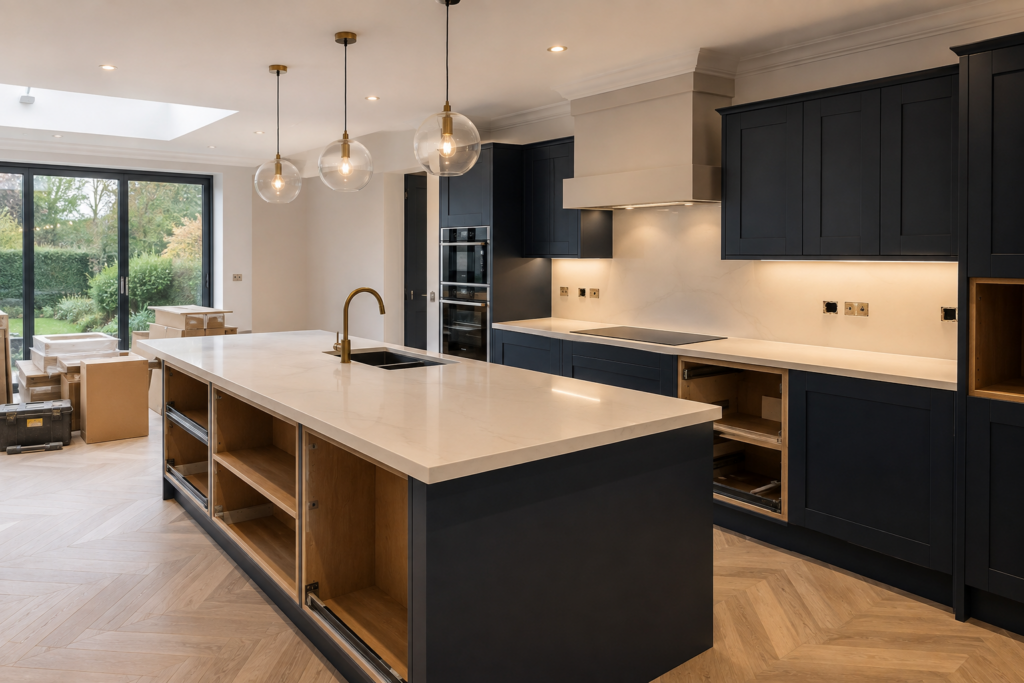
Fitting a kitchen is one of the most exciting and transformative home improvement projects you can undertake. From choosing stylish cabinets to selecting modern appliances, your new kitchen can become a functional, inviting space for cooking, dining, and socialising. However, understanding the kitchen installation cost is critical to planning your project effectively.
The cost of fitting a new kitchen can range from £5,000 to over £25,000, depending on size, materials, appliances, layout and labour. A straightforward kitchen replacement can sit towards the lower end of this range, while a large bespoke kitchen with premium worktops, integrated appliances and structural changes can cost considerably more.
This guide explains how much it costs to fit a kitchen in the UK, what you can expect to pay for different parts of the project and which choices can increase or reduce the final price. It also looks at kitchen fitting costs, installation work, materials and the expenses that are often overlooked when preparing a budget.
Average Cost of Fitting a Kitchen in the UK
The average cost of fitting a kitchen depends heavily on the size of the room and the standard of the kitchen you choose. A basic kitchen with simple cabinets, laminate worktops and standard appliances may cost around £5,000 to £12,000, including installation. This type of project is often suitable when the existing layout is practical and major plumbing or electrical changes are not required.
A mid-range kitchen can cost approximately £12,000 to £25,000. At this level, homeowners may choose better-quality cabinets, quartz or granite worktops, integrated appliances, improved storage and more detailed finishes. The final kitchen installation cost can rise if the design includes an island, additional lighting or changes to plumbing and electrics.
Luxury kitchens can start at around £25,000 and increase significantly depending on the specification. Bespoke cabinetry, premium worktops, high-end appliances, specialist finishes and complex layouts all add to the overall cost. A large kitchen with several work zones may also require more installation time, which affects the labour bill.
It is important to understand that there is no single average price to fit a kitchen that applies to every home. Two kitchens of the same size can have very different prices because the materials, layout, appliances and amount of installation work may differ considerably.
For example, replacing cabinets while keeping the sink, cooker and dishwasher in their existing positions can be relatively straightforward. Moving the sink to another wall may require plumbing changes. Moving an oven or adding new appliances may require electrical work. Removing a wall or changing the shape of the room can introduce building work and additional costs.
The best way to establish a realistic budget is to consider the entire project rather than looking only at the cabinet price. Kitchen fitting involves several connected stages, and each one can affect the final amount you pay.
Kitchen Fitting Cost Breakdown
Cabinets usually represent one of the largest parts of a kitchen budget and can account for around 30% to 40% of the overall cost. Flat-pack cabinets can start from around £500 to £1,000, although the final price depends on the number of units, internal storage and finish. Semi-custom cabinets may cost around £2,000 to £4,000, while fully custom or bespoke cabinetry can reach £5,000 to £10,000 or more.
Cabinet quality matters because these units form the main structure of the kitchen. Cheaper options can work well for some budgets, while higher-specification cabinetry can offer more choice in dimensions, finishes, storage and internal fittings. If your room has unusual corners, sloping walls or limited space, made-to-measure cabinetry may also make better use of the available area.
Worktops are another important part of the cost to fit a new kitchen. Laminate is often one of the more affordable choices, commonly costing around £20 to £40 per square metre. Quartz can cost around £100 to £150 per square metre, while granite may range from approximately £120 to £250 per square metre. Solid wood can cost around £80 to £200 per square metre.
The material alone does not always represent the full worktop cost. Measurements, cutting, joins, edging, cut-outs for sinks and hobs and installation can all affect the final price. Natural stone and engineered materials may also require specialist measurement and fitting, particularly when the design includes unusual shapes or large sections.
Appliances can make a significant difference to the total kitchen installation cost. Standard appliances such as a fridge, oven and dishwasher may cost around £1,000 to £3,000 in total, depending on the brands and models selected. High-end or smart appliances can push the appliance budget towards £5,000 to £10,000 or more.
Integrated appliances can create a clean appearance because they sit within the cabinetry, but they need careful planning and fitting. Appliance dimensions must match the cabinet design, while electrical and ventilation requirements must also be considered. Choosing appliances after the kitchen design has been finalised can create problems, so it is better to confirm specifications early.
Flooring is another expense that should be included in the budget. Vinyl can cost around £15 to £30 per square metre, tiles around £20 to £50 per square metre and engineered wood around £40 to £100 per square metre. The total flooring cost depends on the size of the room, preparation work and installation method.
Lighting can range from a simple installation costing around £200 to £500 to a more detailed scheme costing £500 to £1,500 or more. Under-cabinet lighting, pendant lights, ceiling spotlights and integrated lighting can all change the appearance and practicality of a kitchen. Electrical work may need to be priced separately where new circuits or additional outlets are required.
Kitchen fitting labour is another major part of the budget. A small kitchen installation may cost approximately £1,500 to £3,000, while a medium kitchen may cost around £3,000 to £5,000. Large or complex kitchens can require £5,000 to £10,000 or more in labour.
These figures are useful for initial planning rather than fixed quotations. Kitchen fitting costs vary between regions and installers, and the complexity of the work can have a greater effect than the size of the room alone.
Additional services can include plumbing, electrical work, tiling, splashbacks and waste removal. Plumbing may cost around £300 to £1,000, while electrical work can range from £300 to £1,500 depending on what needs to be changed. Tiling and splashbacks can cost approximately £20 to £50 per square metre, while waste removal may add another £100 to £300.
What Affects the Cost of Fitting a New Kitchen?
Kitchen size is one of the most obvious factors, but it is not the only one. A small kitchen with a complicated layout can require more work than a larger room with a simple design. Every additional cabinet, worktop section, appliance and storage feature can increase the material and installation cost.
The existing layout also has a major effect on the budget. Keeping plumbing and electrical points in their current positions can reduce installation work. Changing the position of a sink, dishwasher, washing machine or cooker can involve additional pipework and electrical connections.
The complexity of the design can also influence the cost. A straightforward run of cabinets is generally easier to install than a kitchen with an island, tall storage, curved units, multiple work zones and integrated appliances. Bespoke features can add design and manufacturing costs, but they can also make better use of awkward spaces.
Material selection is another important consideration. Laminate worktops are usually more affordable than quartz, granite or solid wood. Similarly, standard cabinet finishes may cost less than specialist doors, painted finishes or bespoke materials. The right choice depends on the appearance you want, how much use the kitchen will receive and the budget available.
Appliance integration can affect both materials and labour. Integrated fridges, dishwashers, ovens and microwaves need accurate cabinet dimensions and careful installation. If several appliances are included, the design must allow suitable ventilation, access and electrical connections.
The condition of the room should also be considered before work begins. An older kitchen may reveal damaged walls, uneven floors, outdated wiring or plumbing issues once the existing units are removed. These problems are not always visible during the initial planning stage, which is why allowing some contingency in the budget is sensible.
For a major renovation, building work may become part of the project. Removing walls, creating new openings, moving doors or windows, changing flooring levels or altering ventilation can increase the cost considerably. These works should be identified as early as possible rather than added unexpectedly during installation.
Location can also influence kitchen fitting prices. Labour rates can vary across the UK, and projects in London and other high-cost areas may have different installation prices from those in other regions.
What Does Kitchen Installation Usually Include?
A standard kitchen installation can cover several different tasks, but the exact scope depends on the quotation. Removing the old kitchen may be included, although some installers charge this separately. The same applies to waste disposal, flooring preparation, tiling and certain electrical or plumbing works.
Cabinet installation normally involves positioning and securing the units, fitting doors and drawers and making sure the cabinets are correctly aligned. Worktop installation then depends on the material selected. Some worktops can be installed as part of the main fitting process, while stone and other specialist materials may require separate measurement and fabrication.
Appliance installation can include fitting ovens, hobs, dishwashers and other integrated appliances. However, specialist connections may require qualified tradespeople. Electrical connections, gas work and certain plumbing tasks should be completed by appropriately qualified professionals.
A clear quotation should explain what is included and what is excluded. This is particularly important when comparing kitchen installation costs from different companies. A cheaper quote may not actually represent a lower overall cost if essential services have been left outside the quoted figure.
Ask whether the price includes old kitchen removal, waste disposal, worktop fitting, appliance installation, plumbing, electrical work, tiling, flooring and finishing work. It is also useful to ask how unexpected issues will be handled if they are discovered after the old kitchen is removed.
If you are researching fitted kitchens, it can also help to compare the cost of installation with the overall design and specification. A separate guide about fitted kitchen design can help explain how cabinet layouts, storage and room dimensions affect the planning process.
How to Reduce the Average Price for Kitchen Fitting
Reducing kitchen fitting costs does not always mean choosing the cheapest products. Good planning can often make a greater difference because it reduces unnecessary work and prevents changes during installation.
Keeping the existing kitchen layout is one of the simplest ways to control costs. If the sink, dishwasher and cooker can remain in sensible positions, there may be less need for new plumbing and electrical work. This can reduce both labour time and material costs.
Choosing where to spend your budget can also help. You might decide to invest more in a durable worktop while choosing a simpler cabinet finish. Alternatively, you could prioritise storage features and choose standard appliances. A kitchen budget does not need to give equal spending to every part of the room.
Reusing suitable elements can sometimes reduce the project cost. Existing appliances may be retained if they are in good condition and fit the new design. However, older appliances should be checked for condition, efficiency and compatibility before deciding to keep them.
Shopping during sales can also reduce the cost of appliances, lighting and certain materials. It is worth comparing specifications rather than choosing products based only on their advertised discount.
Simple preparation work can sometimes be completed before installation, depending on the agreement with the installer. Painting areas that will remain exposed, clearing the room and arranging access can help the project start smoothly. Any work you plan to complete yourself should be agreed in advance so it does not interfere with the installation schedule.
Most importantly, avoid cutting costs on essential electrical, plumbing or gas work. These areas affect the safety and long-term performance of the kitchen and should be handled properly.
Current Kitchen Design Trends and Their Effect on Cost
Modern kitchen design has moved towards spaces that combine cooking, storage, dining and everyday living. Open layouts, kitchen islands and integrated storage remain popular because they make the room feel organised while providing practical working space.
Smart kitchens are also becoming more common. Connected ovens, refrigerators, coffee machines, lighting systems and other appliances can add convenience, but they can increase the initial kitchen installation cost. The long-term value depends on how often these features will actually be used.
Integrated storage is another strong design trend. Pull-out larders, deep drawers, corner storage and concealed compartments can help make better use of available space. These features may cost more than basic cupboards, but they can make a significant difference to how easily the kitchen works every day.
Colour choices have also become more varied. Navy blue, forest green, black, warm neutrals and natural wood finishes are often used alongside lighter worktops and metallic details. A more distinctive finish does not necessarily mean a much higher cost, although specialist door finishes can increase the cabinet price.
Sustainable choices are also receiving more attention. Homeowners may consider durable materials, energy-efficient appliances and finishes that can remain attractive for many years. A product with a higher initial price may make sense when it offers better longevity or lower running costs.
If you are considering a full kitchen renovation, it is useful to look beyond appearance. The best kitchen design balances storage, movement, lighting, appliances, worktop space and everyday habits. This approach can help prevent expensive changes later.
Related guidance about kitchen renovation costs can also help when your project involves more than replacing cabinets. If you are comparing different kitchen styles, a resource about modern fitted kitchen ideas can help you understand how design choices affect both appearance and budget.
Frequently Asked Questions About Kitchen Fitting Costs
How much does it cost to fit a new kitchen?
The cost of fitting a new kitchen can range from around £5,000 for a basic project to more than £25,000 for a larger or luxury kitchen. The final price depends on cabinet quality, worktops, appliances, labour, room size and whether plumbing or electrical work is required.
How much do kitchen fitters charge in the UK?
Kitchen fitters may charge around £150 to £250 per day, although rates vary according to location, experience and the type of work involved. A complete installation may cost approximately £1,500 to £10,000 or more in labour, depending on the complexity of the project.
What is the average price to fit a kitchen?
The average price for kitchen fitting labour alone is often around £3,000 to £5,000 for a medium-sized project. This does not necessarily include cabinets, worktops, appliances, flooring, major electrical work, plumbing or other renovation costs.
How much does it cost to fit a kitchen including appliances?
A new kitchen including appliances can cost approximately £10,000 to £30,000, although smaller projects can cost less and premium kitchens can cost substantially more. Appliance brands, cabinet quality, worktops and installation requirements all influence the final figure.
Is it cheaper to buy a kitchen and pay separately for fitting?
Not necessarily. Buying cabinets separately can sometimes reduce the product cost, but the overall price depends on delivery, assembly, worktop fitting, appliance installation and other trades. A complete quotation can make it easier to understand the true cost of the project.
How long does it take to fit a new kitchen?
A straightforward kitchen installation may take around one to two weeks, while a more complex renovation can take several weeks. The timeframe depends on the size of the kitchen, preparation work, product availability, plumbing, electrical work and any building changes.
Does kitchen fitting include plumbing?
Basic plumbing connections may be included in some installation quotations, but this is not guaranteed. Moving sinks, dishwashers or other water-connected appliances can require additional pipework and may increase the installation cost.
Does kitchen fitting include electrical work?
Some kitchen installation packages include basic electrical connections, while others price electrical work separately. New circuits, sockets, lighting and changes to existing wiring can increase the cost and should be discussed before installation begins.
What is the most expensive part of fitting a kitchen?
Cabinetry, worktops, appliances and labour are usually among the largest expenses. The most expensive element varies between projects. A bespoke kitchen may spend more on cabinetry, while a kitchen with premium appliances and stone worktops may have a higher product cost.
Can I reduce kitchen fitting costs without changing the design?
Yes. Keeping the existing plumbing layout, comparing appliance prices, choosing materials carefully and avoiding unnecessary structural changes can help control costs. Good planning before installation can also reduce the chance of paying for changes later.
Should I budget extra for unexpected kitchen costs?
Yes. Setting aside a contingency is sensible, particularly for older properties and full renovations. Removing an existing kitchen can reveal issues with walls, floors, plumbing or wiring that were not visible during the initial survey.
Is a bespoke fitted kitchen worth the extra cost?
A bespoke kitchen can be useful when the room has unusual dimensions, difficult corners or specific storage requirements. The value comes from how effectively the design uses the available space and meets your everyday needs, rather than simply from having a higher price.
Planning Your Kitchen Fitting Budget
Understanding how much it costs to fit a kitchen is only the first stage. The next step is to create a realistic budget based on the room, your priorities and the level of work required. Start by deciding whether you need a simple replacement or a complete renovation. This distinction can have a major effect on the final figure.
A simple replacement may involve removing existing units and installing new cabinets in roughly the same positions. A complete renovation could involve new flooring, lighting, plumbing, electrics, appliances, worktops and changes to the layout. The more elements that change, the more important detailed planning becomes.
It is also worth considering the long-term use of the kitchen. A cheaper cabinet may look attractive initially, but the best option depends on how heavily the kitchen will be used and how much storage you need. Similarly, a premium worktop may be worthwhile for a busy family kitchen, while a simpler material may suit a smaller space.
When comparing quotations, look beyond the headline figure. Check what materials are specified, whether installation is included and which additional services have separate costs. A detailed quotation makes it easier to compare like for like and understand where your money is going.
A well-planned budget should give you enough flexibility to make sensible choices without losing sight of the total cost. It should also allow room for necessary preparation or remedial work if the existing kitchen requires attention.
Conclusion
The cost of fitting a new kitchen can range from around £5,000 to more than £25,000, with the final figure shaped by the kitchen size, cabinetry, worktops, appliances, labour and level of renovation required. Careful planning, clear quotations and sensible material choices can help you create a kitchen that fits both your lifestyle and your budget.
At V Design Kitchens and Bedrooms, we provide professionally planned and fitted kitchen solutions designed around each home’s space, practical needs and chosen specification. Our approach focuses on creating kitchens that bring together thoughtful design, useful storage and lasting everyday value.
If you are planning a new kitchen, consider your layout, storage, appliances, materials and installation requirements before committing to a budget. Exploring related guidance on fitted kitchens, bespoke kitchen design and kitchen renovation can also help you make informed decisions before your project begins.