


The kitchen has changed greatly over the years. It has moved from a purely practical cooking area to one of the most important rooms in a modern home. Today, many homeowners want a kitchen that feels fresh, organised and comfortable while still offering enough space for everyday cooking, storage and family life. This is where the contemporary kitchen has become an increasingly popular choice.
A contemporary kitchen reflects current interior design ideas while keeping the focus on practical living. It usually combines clean lines, simple shapes, understated colours, modern materials and carefully planned storage. Unlike a kitchen built around one fixed historical style, contemporary kitchen design can change as tastes, materials and technology develop.
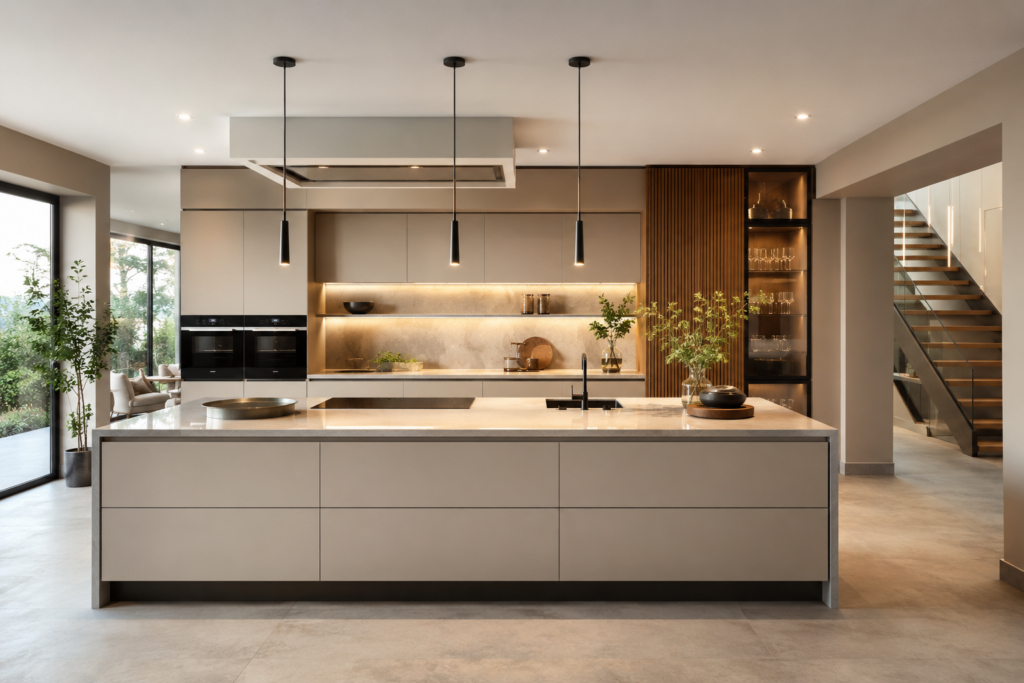
So, what is a contemporary kitchen? In simple terms, it is a kitchen designed around the way people live today. It balances appearance with everyday use. It can include handleless kitchen cabinets, integrated appliances, open shelving, large kitchen islands, neutral colours, natural materials, modern lighting and clever storage. The final result should feel calm rather than crowded, stylish rather than excessive, and practical rather than purely decorative.
A contemporary kitchen does not have to look cold or overly minimal. Warm wood finishes, textured surfaces, natural stone, soft lighting and carefully selected colours can make the room feel welcoming. The important point is that every element has a clear purpose and works with the rest of the space.
Contemporary kitchen design also works across different property types. A large open-plan kitchen can use a spacious island and full-height cabinets, while a smaller kitchen can use compact storage, pale finishes and integrated appliances to create a more open feel. This flexibility makes contemporary kitchens suitable for many modern homes.
What Defines a Contemporary Kitchen?
One of the clearest features of a contemporary kitchen is its clean appearance. Cabinet doors often have flat fronts, simple profiles and very little decorative detailing. Instead of ornate mouldings or heavily patterned surfaces, the design uses proportion, material and colour to create visual interest.
Clean lines are important because they help the kitchen appear organised. Straight cabinet runs, simple worktops and carefully planned appliance positions can create a sense of order. This does not mean every surface needs to be completely plain. A textured wood-effect finish, stone worktop or subtle statement splashback can add character without making the room feel busy.
Colour also plays an important role. Contemporary kitchens commonly use neutral colours such as white, grey, beige, taupe, cream and black. These shades can make the kitchen feel calm and allow materials to become part of the design. However, contemporary kitchen colour schemes are not limited to neutrals. Deep green, navy, muted blue, earthy brown and other modern shades can work well when they are balanced with suitable cabinetry and lighting.
Material selection can change the entire character of a kitchen. Gloss finishes can reflect light and create a crisp appearance, while matt finishes offer a softer visual effect. Wood-effect cabinetry can introduce warmth, while stone-effect or natural stone worktops can provide texture and contrast. Glass, metal and carefully selected tiles can also add a modern touch.
Another defining feature is the way storage is handled. Contemporary kitchen cabinets are usually designed to reduce visible clutter. Tall units can make use of vertical space, while deep drawers can store cookware and everyday utensils. Pull-out pantry storage can make food easier to reach, while internal cabinet systems can keep smaller items organised.
The aim is not simply to have more cupboards. Good contemporary kitchen design considers how the homeowner moves around the room. Frequently used items should be easy to access, preparation areas should have enough working space and appliances should sit in sensible positions.
Lighting is another important element. Natural light can make a contemporary kitchen feel brighter and more spacious. Where natural light is limited, a combination of ceiling lighting, under-cabinet lighting and pendant lights can create different layers of illumination. Good lighting should support cooking while also making the room comfortable when used for dining or socialising.
Modern appliances are often integrated into the cabinetry. Built-in ovens, integrated refrigeration, concealed extraction and built-in dishwashers can create a more consistent appearance. Smart appliances may also be included where they offer genuine value to the household.
The strongest contemporary kitchens do not simply collect modern features. They bring those features together into one considered space. The cabinets, worktops, flooring, lighting, appliances and storage should feel as though they belong to the same design.
Contemporary Kitchen Cabinets and Handleless Design
Contemporary kitchen cabinets form a major part of the room’s overall appearance. Their size, finish, layout and opening system can influence both the visual style and practical experience of the kitchen.
Flat-panel kitchen cabinets are commonly associated with contemporary design because they provide a smooth and uncluttered appearance. They can be finished in matt laminate, gloss, wood-effect surfaces, painted finishes or other modern materials. The right option depends on the home’s existing interior, the amount of natural light and the level of maintenance the household prefers.
Handleless kitchens are another popular choice. Instead of traditional handles fitted to the front of every cabinet, doors and drawers can use integrated profiles, recessed grips or push-to-open mechanisms. This creates uninterrupted cabinet surfaces and can make a compact kitchen look more spacious.
However, a handleless kitchen is not simply about appearance. The opening system should be comfortable for everyday use. Drawers used frequently should open smoothly, and cabinet doors should provide practical access to the stored items. A well-designed kitchen considers these details before the final cabinet layout is chosen.
Contemporary kitchen cabinets can also combine different finishes. For example, a kitchen may use warm wood-effect tall cabinets with softer neutral base units. Another design may combine matt cabinetry with a contrasting stone worktop. Using two finishes can add depth without making the room feel visually complicated.
Storage inside the cabinets is equally important. Modern kitchen design can include deep drawers for pans, internal drawers for smaller items, pull-out larders, corner storage and full-height units. These features help make better use of the available space.
In smaller kitchens, vertical storage can be especially useful. Tall cabinets can use areas that might otherwise remain unused. In larger rooms, a kitchen island can provide additional drawers, preparation space and seating while also helping define the boundary between cooking and living areas.
The best cabinet layout depends on the room rather than following a fixed formula. A narrow kitchen, an open-plan kitchen and a kitchen with unusual architectural features will all require different solutions. Windows, doors, radiators, structural walls and existing plumbing can influence where cabinets and appliances should be placed.
This is why contemporary kitchen design is more than choosing fashionable cabinet doors. The layout needs to respond to the actual room and the habits of the people using it.
What Are the Benefits of a Contemporary Kitchen?
A contemporary kitchen can offer several practical advantages when the design is planned around everyday needs. Functionality is one of its strongest qualities because modern layouts often focus on making cooking, preparation, cleaning and storage easier.
A well-planned contemporary kitchen can reduce unnecessary movement between different areas. The refrigerator, sink, hob and preparation surfaces can be positioned to create a comfortable working pattern. This can make everyday cooking feel less tiring, especially when several people use the kitchen at the same time.
Contemporary kitchens can also make good use of limited space. Clever storage can turn awkward corners, tall walls and unused cabinet areas into useful storage. In a small kitchen, this can make a noticeable difference because every available centimetre matters.
Another benefit is visual simplicity. When storage is planned properly, fewer everyday items need to remain on the worktop. This can make the kitchen easier to clean and create a calmer appearance.
Contemporary design can also adapt to changing household needs. A kitchen island may provide a place for children to have breakfast, a surface for food preparation and an informal seating area. In an open-plan home, the kitchen can become part of the dining and living environment rather than feeling separated from the rest of the house.
Energy efficiency can also be considered through the selection of modern appliances, suitable lighting and thoughtful planning. Energy-efficient ovens, refrigeration and dishwashers can help reduce household energy use, while LED lighting can provide effective illumination with lower energy consumption than older lighting systems.
Maintenance is another consideration. Simple cabinet fronts and carefully selected worktops can be easier to keep clean than heavily detailed surfaces. However, every material has different care requirements, so homeowners should consider cleaning instructions before making a final choice.
A contemporary kitchen can also add visual value to a home when the design suits the property. A balanced colour scheme, good proportions and quality finishes can help the kitchen feel connected to the wider interior.
Most importantly, the style does not have to be dictated by trends alone. A contemporary kitchen can include personal choices while maintaining its modern character. The goal should be a room that looks current but still feels comfortable several years after installation.
Modern Kitchen Design Compared With Contemporary Kitchen Design
The words modern and contemporary are often used as though they mean exactly the same thing, but there is a useful difference between them. Modern design is commonly linked with a particular design movement that developed during the twentieth century. It often uses simple forms, functional layouts and materials such as wood, glass and metal.
Contemporary design refers more directly to what is current. It can borrow ideas from modern design while also incorporating newer materials, colours, technology and changing lifestyle preferences. This means a contemporary kitchen can evolve over time.
For example, a contemporary kitchen may combine flat-panel cabinetry associated with modern design with a natural stone worktop, warm timber finish and current smart appliances. The result does not need to follow one historical design rule.
The difference between classic and contemporary kitchens is easier to see. Classic kitchens often use decorative cabinet doors, traditional handles, detailed mouldings and warmer, more established colour schemes. Contemporary kitchens generally use simpler forms and less decoration.
Neither style is automatically better. The right choice depends on the property, personal taste and how the kitchen will be used. A period home may suit a carefully balanced classic design, while a newly built home may work particularly well with a contemporary kitchen.
There can also be overlap between styles. A contemporary kitchen can include natural wood, traditional-looking materials or softer colours without losing its current appearance. The key is how those elements are combined.
This flexibility is one reason contemporary kitchen design continues to change. Today’s contemporary kitchen may look different from one designed several years ago because materials, appliances, colours and lifestyles continue to develop.
How Can You Make a Kitchen Look Contemporary?
Creating a contemporary kitchen does not always mean replacing every part of the room. The overall appearance comes from how the different elements work together.
Cabinet fronts are usually one of the most noticeable areas to consider. Replacing heavily decorative doors with simple flat-front cabinetry can immediately change the character of a kitchen. A restrained colour palette can also make the space feel more current.
Worktops have an equally important role. A slim-profile surface can create a crisp appearance, while a thicker stone or stone-effect worktop can provide a stronger visual feature. The choice should consider durability, cleaning and the way the kitchen will be used.
Integrated appliances can help create a more unified appearance. When appliances sit behind matching cabinet fronts or within carefully planned spaces, the kitchen can look less fragmented.
Lighting can transform the room without changing the main cabinetry. Under-cabinet lighting can illuminate preparation areas, while pendant lights above an island can create a visual centre point. Warm lighting can also prevent a neutral kitchen from feeling too stark.
Decluttering is another simple way to create a contemporary appearance. Worktops should have enough clear space for preparation and everyday use. Appliances and accessories that are rarely used can be stored away when possible.
Open shelving can work well when used carefully. It can display attractive crockery, glassware or decorative objects, but too much open shelving can create visual clutter. The balance between closed storage and open display is important.
Natural textures can also make a contemporary kitchen feel more welcoming. Wood-effect finishes, textured tiles, stone surfaces and carefully selected fabrics can soften a room dominated by smooth cabinetry.
If the kitchen connects directly with a dining or living area, the design should also consider the adjoining spaces. Flooring, lighting and colour choices can help create a visual connection between the areas without making every room identical.
For homeowners considering a wider kitchen renovation, related information about bespoke fitted kitchens, kitchen design ideas and kitchen renovation costs can help with early planning. Looking at fitted kitchen projects can also provide useful inspiration for layouts, storage and material combinations.
Contemporary Kitchen Ideas for Different Home Layouts
A contemporary kitchen can work in many types of homes, but the design needs to respond to the available space. A small kitchen may benefit from tall cabinets, integrated appliances and light-coloured surfaces. These choices can help the room feel organised without making it visually heavy.
In a larger kitchen, an island can become the main feature. It can provide additional storage, a generous preparation surface and seating. The island can also help divide a large open-plan room into practical zones.
Open-plan kitchens need particular attention because the kitchen remains visible from other parts of the home. Cabinet finishes, lighting and appliances should therefore look considered from different viewpoints. Full-height cabinetry can provide useful storage while creating a strong architectural backdrop.
A narrow kitchen may work well with a single-wall or galley layout. In this setting, storage planning becomes especially important. Pull-out units, deep drawers and wall-height cabinets can provide more storage without taking up additional floor space.
Homes with unusual layouts may need more creative planning. Sloping ceilings, awkward corners, structural columns and restricted access can all affect cabinet placement. A contemporary kitchen does not require a perfectly shaped room. It requires a design that makes sensible use of the room that exists.
For anyone considering several fitted areas across a property, the principles used in contemporary kitchen design can also connect with ideas found in fitted wardrobes, fitted bedrooms and fitted furniture. Consistent finishes and careful storage planning can help different rooms feel connected.
The kitchen should also be considered in relation to natural light. A room with large windows may support darker cabinetry because daylight can balance the deeper tones. A darker kitchen may need lighter finishes or additional lighting when natural light is limited.
Material combinations should be selected with the size and character of the room in mind. Too many competing textures can make a small kitchen feel busy, while a large kitchen may need contrasting materials to avoid looking flat.
The strongest result comes from balance. Contemporary design should feel intentional, not as though every available modern feature has been placed into one room.
What Can Make a Contemporary Kitchen Look Cheap?
A contemporary kitchen can lose its sophisticated appearance when the materials, proportions or installation details do not work together. The problem is not necessarily the price of individual products. A lower-cost material can still look attractive when it has been used thoughtfully.
Poor proportions can have a major effect. Cabinets that do not align properly, awkward gaps around appliances or inconsistent door sizes can make the kitchen look unfinished. Good planning should consider the full wall rather than treating each cabinet as a separate item.
Too many finishes can also create confusion. Combining several cabinet colours, worktop patterns, tile designs and metallic finishes may make the room feel crowded. A contemporary kitchen usually benefits from a controlled material palette.
Visible clutter is another issue. Even an expensive kitchen can look untidy when worktops are covered with appliances, packaging and miscellaneous items. Storage should be planned around the objects the household actually uses.
Poor lighting can also affect the appearance of materials. A carefully selected worktop may look completely different under harsh or poorly positioned lighting. Lighting should therefore be considered during the design stage rather than treated as an afterthought.
Cheap-looking hardware can be another concern when it does not suit the rest of the room. Handles, taps, sinks and lighting should complement the cabinet and worktop choices.
Installation quality matters too. Uneven doors, poorly finished joints, misaligned drawers and untidy edges can affect the final result. The workmanship should match the quality of the design.
A contemporary kitchen does not need to use the most expensive materials available. It needs good proportions, suitable materials, thoughtful storage and careful finishing.
Frequently Asked Questions About Contemporary Kitchens
What is a contemporary kitchen style?
A contemporary kitchen style reflects current design preferences and usually combines clean lines, simple cabinet fronts, modern materials, practical storage and a restrained colour palette. It focuses on how the kitchen works as well as how it looks. Unlike a fixed historical style, contemporary design can change as new materials, technology and lifestyle preferences develop.
What is the difference between modern and contemporary kitchen cabinets?
Modern kitchen cabinets are often associated with a specific design movement and its emphasis on simple forms and practical construction. Contemporary kitchen cabinets describe a current style that can include modern ideas alongside newer finishes, colours, storage systems and technology. Contemporary cabinets are often flat-fronted, simple and available in a wide range of materials.
What is the difference between a classic and contemporary kitchen?
A classic kitchen usually includes traditional details such as framed doors, decorative profiles, detailed handles and established colour combinations. A contemporary kitchen generally uses cleaner lines, simpler cabinet fronts, modern materials and less decoration. However, a contemporary kitchen can still include warm materials and personal decorative touches.
How can I make my kitchen look contemporary?
Start with the main visual elements such as cabinet doors, worktops, lighting and appliances. Simple cabinet fronts, a controlled colour palette, integrated appliances and modern lighting can create a contemporary appearance. Reducing worktop clutter and improving storage can also make a major difference.
What is the difference between modern and contemporary design?
Modern design is generally linked to a recognised design period, while contemporary design describes what is current. Contemporary interiors can borrow elements from modern design but may also include ideas from other styles. This makes contemporary design more flexible and responsive to changing trends.
What colours work best in a contemporary kitchen?
White, grey, beige, cream, black, taupe and natural wood tones are common choices. However, contemporary kitchen colour schemes can also include muted greens, blues and other deeper shades. The best colour depends on natural light, room size, cabinet finish and the wider interior.
Are handleless kitchens contemporary?
Yes, handleless kitchens are strongly associated with contemporary kitchen design because they create clean cabinet surfaces and reduce visual detail. Different opening systems are available, so the choice should consider comfort, cabinet use and the needs of the household rather than appearance alone.
Are contemporary kitchens suitable for small kitchens?
Yes. Contemporary kitchen design can work particularly well in smaller rooms because it often uses simple cabinet fronts, integrated appliances and efficient storage. Tall cabinets, deep drawers and carefully planned layouts can help use available space without creating a crowded appearance.
Is a kitchen island essential for a contemporary kitchen?
No. A kitchen island can be useful in a larger room, but it is not required for a contemporary design. A well-planned peninsula, breakfast bar or open preparation area can provide similar benefits in a smaller kitchen.
Are contemporary kitchens easy to maintain?
They can be easier to maintain when the design uses practical surfaces and limits unnecessary decorative details. However, maintenance depends on the specific materials used. Gloss, matt, laminate, timber-effect, stone and other finishes all have different cleaning requirements.
Can a contemporary kitchen feel warm and homely?
Yes. Contemporary does not mean cold or clinical. Warm wood-effect cabinetry, natural textures, soft lighting, earthy colours and comfortable seating can make a contemporary kitchen feel inviting. The key is to balance clean forms with materials that add warmth.
Do contemporary kitchens increase home value?
A well-designed kitchen can make a positive impression on potential buyers, but there is no single design style that guarantees an increase in property value. A practical layout, good condition, suitable storage and finishes that suit the property are more important than following a particular trend.
Planning a Contemporary Kitchen
Planning should begin with the way the room will be used rather than with cabinet colours or decorative finishes. Think about who cooks, how often meals are prepared, where food is stored and whether the kitchen is also used for dining, homework or socialising.
The existing structure should also be assessed. Doorways, windows, plumbing, electrical points and structural features can influence the possible layout. Understanding these restrictions early can prevent unrealistic design choices.
Storage should be considered alongside the cabinet layout. A kitchen needs space for cookware, food, cleaning products, small appliances and everyday items. The right storage arrangement can make the room feel much larger without increasing its physical size.
Material selection should follow the practical needs of the household. A busy family kitchen may need hard-wearing surfaces and easy-to-clean finishes, while a kitchen used less frequently may allow greater focus on decorative materials.
Budget should also be considered from the beginning. Cabinetry, worktops, appliances, lighting, flooring, plumbing, electrical work and installation can all affect the final cost. For homeowners researching a kitchen renovation in London or elsewhere in the UK, understanding these separate elements can make early budgeting more realistic.
It can also help to look at completed kitchen projects before making decisions. Real kitchens show how cabinet colours, worktops, lighting and storage work together in a finished room. They can provide better inspiration than choosing individual samples without considering the whole space.
The final design should feel appropriate for the home. A contemporary kitchen should not look as though it belongs in a completely different building. The architecture, room proportions and existing interior should influence the final choice.
Conclusion
A contemporary kitchen brings together current design ideas, practical storage and comfortable everyday living. Clean cabinet lines, modern materials, thoughtful lighting, integrated appliances and carefully planned layouts can create a kitchen that feels current without becoming overly dependent on short-lived trends.
For homeowners planning a new kitchen, V Design Kitchens and Bedrooms provides contemporary kitchen design and fitted solutions created around the needs of the home. We focus on combining practical layouts, considered materials and attractive finishes to create kitchens that feel useful, comfortable and well suited to modern living.
A successful contemporary kitchen is not simply a room filled with modern products. It is a space where design decisions make everyday tasks easier while creating an environment that feels welcoming, balanced and personal.