


A living room is often the heart of a home where families relax, spend time together and welcome guests. As modern homes continue to focus on comfort, style and better use of space, homeowners are looking for smarter interior solutions that combine entertainment, storage and design. A Fitted Media Wall has become a popular choice because it can transform an ordinary wall into a practical and visually appealing feature that complements the overall character of a room.
Designing a media wall is not only about creating a place for a television. It involves understanding the room layout, choosing suitable materials, considering storage needs and creating a design that feels like a natural part of the home. A well-planned fitted media wall should match the existing interior style while adding a unique feature that improves the atmosphere of the space.
Many homeowners search for ideas on how to design a fitted media wall because they want a solution that looks elegant but also works for everyday living. From choosing the right colours to planning lighting and storage, every detail plays an important role in achieving a balanced interior. Understanding these elements helps create a media wall that feels personal, practical and visually connected with the rest of the home.
Understanding the Role of a Fitted Media Wall in Modern Alperton Interiors
A Fitted Media Wall is more than a decorative feature. It is a carefully planned interior addition that combines entertainment, storage and design elements within one structured space. Unlike standalone television units, a fitted media wall is designed around the room and can be created to suit specific dimensions, layouts and personal preferences.
Modern interior design focuses on creating spaces that feel open, organised and comfortable. A media wall helps achieve this by reducing clutter and bringing different features together in one area. Instead of having separate furniture pieces for a television, speakers, books, ornaments and storage, a fitted design can bring everything into one organised arrangement.
The popularity of fitted media walls has grown because homeowners want living spaces that reflect their lifestyle. A family may need hidden storage for everyday items, while another homeowner may prefer open shelving to display books, artwork or decorative pieces. The design possibilities allow the feature to become part of the room rather than appearing as an added installation.
When planning a media wall, it is important to consider the existing interior theme. A contemporary home may benefit from a simple design with clean finishes, while a traditional property may suit warmer materials and classic details. The aim is to create a connection between the media wall and the surrounding furniture, flooring, wall colours and lighting.
A successful design does not overpower the room. Instead, it creates harmony. The best fitted media walls feel natural because they follow the style and proportions of the home. This is why careful planning before installation is essential.
Choosing The Right Style For Your Fitted Media Wall
The style of a Fitted Media Wall should reflect the personality of the home and the atmosphere you want to create. Before deciding on colours, finishes or features, it is important to understand the overall interior style of the room. A media wall should enhance the existing design rather than compete with other elements.
For modern interiors, minimal designs with smooth finishes and simple lines are often preferred. These designs create a clean appearance and allow the television, lighting and decorative elements to become part of the overall feature. Neutral colours such as soft grey, warm white or natural wood tones can help create a calm and timeless look.
For homes with a more traditional style, materials with natural textures can create a warmer feeling. Wooden finishes, classic shelving designs and carefully selected decorative details can help the media wall blend with the existing character of the property.
The size of the room also influences the design choice. A large living room may support a wider media wall with additional storage areas and display sections. Smaller rooms may benefit from a simpler design that creates a stylish focal point without making the space feel crowded.
Many homeowners also consider how the media wall will look throughout the day. A design that appears attractive when the television is switched on should also look appealing when the screen is not in use. Decorative shelves, integrated storage and balanced wall features can help maintain the appearance of the room at all times.
The key is to create a design that feels connected to the home. The best results come from considering the existing interior before making design decisions.
Planning The Perfect Layout For Your Living Space
The layout of a Fitted Media Wall has a major impact on both appearance and functionality. A poorly planned design can make a room feel unbalanced, while a carefully considered layout can improve the way people use the space every day.
Before installation, homeowners should consider the position of the television, seating arrangement, natural light sources and existing furniture. The viewing angle should feel comfortable from the main seating areas, while the overall structure should maintain good flow within the room.
The wall chosen for the media feature should provide enough space for the design without making other areas feel restricted. Some rooms work well with a full wall design, while others may suit a smaller feature that focuses on the television area and storage.
Storage planning is another important part of the layout. Many homeowners want to hide cables, gaming equipment, remote controls and other entertainment items. Built-in storage can help maintain a neat appearance while keeping frequently used items easily accessible.
Open and closed storage options can also be combined to create balance. Closed cupboards provide a clean look by keeping items out of sight, while open shelves allow homeowners to display personal accessories and decorative pieces.
The correct layout should support the way the room is used. A living room designed for family gatherings may need practical storage, while a space created mainly for relaxation may focus more on visual appeal and atmosphere.
A thoughtful layout ensures that the fitted media wall becomes a useful part of daily life rather than only a decorative addition.
Selecting Materials And Finishes That Complement Your Home
The materials chosen for a Fitted Media Wall have a significant effect on the final appearance of the room. Different finishes create different moods, so selecting the right combination is essential for achieving the desired interior style.
Wood finishes are popular because they bring warmth and natural character into living spaces. They work well in homes where homeowners want a comfortable and welcoming atmosphere. Different wood tones can create anything from a modern appearance to a more traditional feel.
Painted finishes offer another design option and can be matched with existing wall colours. A media wall painted in a similar shade to the surrounding walls can create a subtle appearance, while contrasting colours can make the feature stand out as a main focal point.
Textured finishes are also becoming popular in modern interiors. Materials that add depth and visual interest can make a media wall feel more distinctive. However, the finish should always support the overall room design rather than make the space appear too busy.
The choice of materials should also consider long-term appearance and everyday use. Living rooms are active spaces, so finishes should suit the lifestyle of the household and maintain their appearance over time.
A carefully selected material combination helps the media wall feel like a natural extension of the home. It creates a connection between the new feature and the existing interior design.
Creating The Right Lighting For A Fitted Media Wall
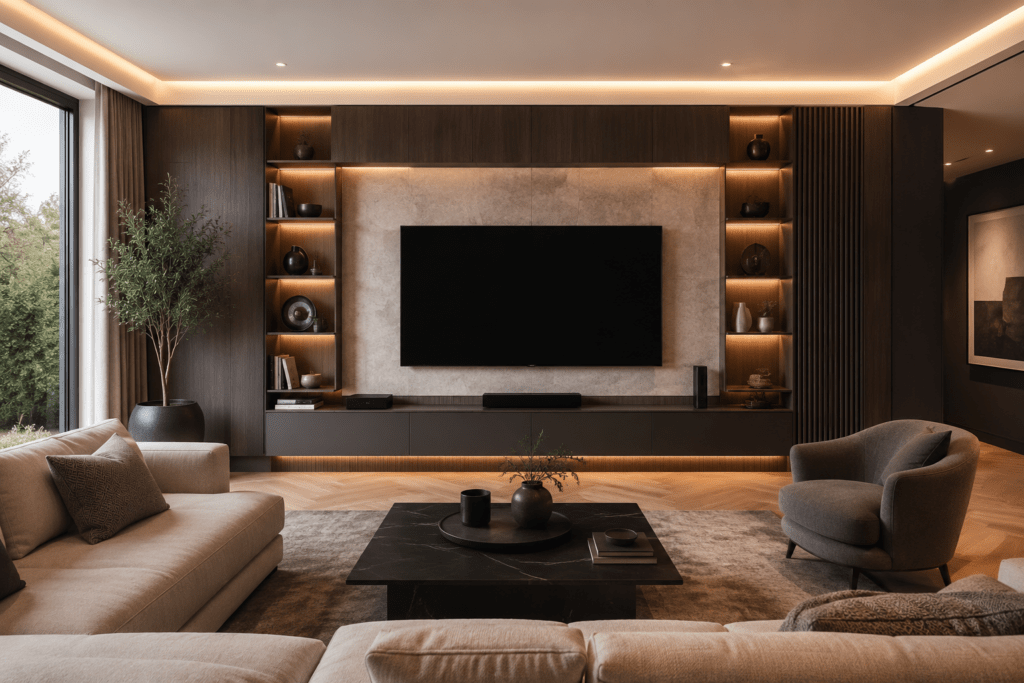
Lighting plays an important role in making a Fitted Media Wall stand out while creating the right atmosphere in the room. The correct lighting design can highlight architectural details, improve comfort and add depth to the overall interior.
Many modern media walls include integrated lighting features because they create a soft and relaxing environment. Subtle lighting around shelves or behind the television area can provide a stylish effect without becoming distracting.
The lighting should complement the purpose of the room. A bright light setting may work well for everyday activities, while softer lighting can create a more comfortable environment for watching films or relaxing in the evening.
Natural light should also be considered during the design process. A television positioned opposite strong sunlight may create viewing issues, while careful planning can help improve comfort throughout the day.
Good lighting design is not only about appearance. It also improves how the space feels. A balanced combination of practical and decorative lighting can make the media wall become a key feature of the room.
Adding Storage Features To Improve Functionality
A modern Fitted Media Wall should not only focus on entertainment but also support the practical needs of everyday living. Storage is one of the main reasons homeowners choose fitted designs because it helps create a cleaner and more organised living environment.
A well-designed media wall can include hidden cupboards, display shelves and dedicated spaces for entertainment equipment. These features help reduce visible clutter while keeping important items within easy reach. Instead of adding separate cabinets or shelving units, homeowners can create a single feature that combines storage and style.
The amount and type of storage required will depend on the lifestyle of the household. Families may need additional space for games, books, electronic devices and accessories, while others may prefer minimal storage with more focus on decorative elements.
Open shelving can add personality by creating areas for photographs, artwork, plants or decorative objects. However, too many display areas can make the design feel crowded. A balanced approach helps maintain a clean appearance while allowing homeowners to add personal touches.
Hidden storage is particularly useful for maintaining a tidy living room. Cables, remote controls and other everyday items can be stored away when not in use, helping the room maintain a more organised appearance.
When planning storage, it is important to think about future needs as well. A media wall should continue to work well as technology, furniture and lifestyle requirements change over time. A thoughtful design creates a space that remains practical for years.
Considering The Size And Proportion Of Your Media Wall Design
The size of a Fitted Media Wall should always match the proportions of the room. Choosing the correct scale is essential because a design that is too large can dominate the space, while a design that is too small may not create the desired impact.
The television size is often the starting point for planning the design. The media wall should provide enough surrounding space to create balance while leaving room for additional features such as storage, shelving or decorative sections.
Ceiling height, wall width and furniture placement should all be considered before finalising the design. A tall room may benefit from a vertical design that draws attention upwards, while a wider room may suit a horizontal layout that creates a balanced appearance.
The relationship between the media wall and other furniture is also important. The sofa, coffee table and other elements should work together with the feature wall to create a comfortable arrangement. A well-proportioned design improves the overall feeling of the room.
Many design mistakes happen when homeowners focus only on the television size and ignore the wider room layout. A successful fitted media wall considers the entire space rather than one individual feature.
How Colour Choices Influence Your Fitted Media Wall Design
Colour has a powerful effect on how a Fitted Media Wall looks and feels within a room. The right colour combination can create a calm atmosphere, highlight the feature or help the design blend naturally with the existing interior.
Neutral shades remain popular because they create a timeless appearance. Colours such as beige, soft grey, cream and natural wood tones can work well with different interior styles and furniture choices.
For homeowners who want a stronger visual feature, darker shades can create a dramatic effect. Deep colours can make the television area stand out and create a sophisticated atmosphere, especially when combined with suitable lighting.
The existing colour scheme of the room should always guide the decision. A media wall that matches the flooring, furniture or wall colours often creates a more connected appearance.
It is also important to think about how colours appear in different lighting conditions. A shade that looks attractive during daylight may appear different in the evening under artificial lighting. Testing colours within the room environment can help achieve better results.
The aim should be to create a colour scheme that feels comfortable and reflects the style of the home. A well-chosen colour palette helps the media wall become a natural part of the interior.
Avoiding Common Fitted Media Wall Design Mistakes
Creating a Fitted Media Wall requires careful planning because small design decisions can affect the final result. Many homeowners focus mainly on appearance but overlook practical considerations that influence everyday use.
One common mistake is failing to plan cable management. Modern entertainment systems often include multiple devices, so considering cable placement during the design stage helps maintain a cleaner finish.
Another issue is choosing a design that does not match the rest of the home. A media wall should complement the interior style rather than appear separate from the room. Understanding the existing design theme helps create a more balanced result.
Incorrect measurements can also affect the final appearance. The wall size, television dimensions, storage requirements and furniture placement should all be considered before starting the project.
Poor lighting choices can also reduce the impact of the design. Lighting should improve the atmosphere without creating distractions or unnecessary brightness around the television area.
Some homeowners also add too many features, which can make the design feel overwhelming. A successful media wall often focuses on simplicity, balance and practical use rather than including every possible design element.
Careful planning helps avoid these problems and creates a feature that looks attractive while supporting everyday living.
Why Professional Planning Matters For A Fitted Media Wall
A Fitted Media Wall is an investment in the appearance and functionality of a home, which is why professional planning can make a significant difference. Experienced designers understand how different elements work together, from measurements and materials to lighting and storage.
A professional approach begins by understanding the homeowner’s requirements and the way the room will be used. This helps create a design that feels personal rather than following a standard approach.
Interior knowledge also helps identify details that may not be obvious during initial planning. Factors such as wall proportions, material combinations, lighting placement and storage requirements all influence the final outcome.
Professional installation can also help achieve a cleaner finish because fitted designs require accuracy and attention to detail. The final appearance depends on how well different parts of the design come together.
Homeowners researching fitted media wall ideas should consider looking at interior design resources, renovation guides and examples of completed projects to understand different possibilities. Gathering inspiration before making decisions can help create a clearer vision.
A well-planned media wall should reflect the needs of the homeowner while improving the overall character of the room.
The Future Of Fitted Media Wall Design In Modern Homes
The popularity of the Fitted Media Wall continues to grow as homeowners look for ways to create smarter and more attractive living spaces. Modern homes are becoming more focused on multifunctional designs where every element serves a practical purpose.
Future trends are likely to include more personalised designs, improved storage solutions and creative ways to combine technology with interior design. Homeowners are increasingly looking for features that support their lifestyle while adding character to their properties.
Technology will continue to influence media wall designs. As entertainment systems become more advanced, homeowners will need spaces that can accommodate changing devices while maintaining a stylish appearance.
Sustainability is also becoming an important consideration in interior design. Many homeowners are paying more attention to material choices and looking for designs that remain valuable and practical for longer periods.
The future of media wall design is not only about appearance. It is about creating living spaces that feel comfortable, organised and connected to the people who use them.
Conclusion
Designing a Fitted Media Wall that matches your home interior perfectly requires more than choosing a television position or selecting attractive finishes. It involves understanding the room layout, considering storage requirements, selecting suitable materials and creating a design that works with the existing style of the property.
A successful media wall should feel like a natural part of the home. It should improve organisation, enhance the atmosphere and provide a practical solution for modern living. From colour choices and lighting to proportions and storage, every detail contributes to the final result.
Homeowners who take time to plan their fitted media wall can create a feature that offers both visual appeal and everyday benefits. By focusing on quality design decisions and understanding how different elements work together, a media wall can become one of the most valuable features within a modern living space.
At V Design Kitchens and Bedrooms, we create beautifully designed Fitted Media Wall solutions that bring together style, storage and entertainment in a way that complements your home. Our designs focus on creating a balanced feature that enhances your living space while reflecting your personal taste, interior style and everyday needs. We help transform empty walls into practical and eye-catching focal points designed for modern living.